ICT Business Analyst
Internal Project
Electrical Manufacturing
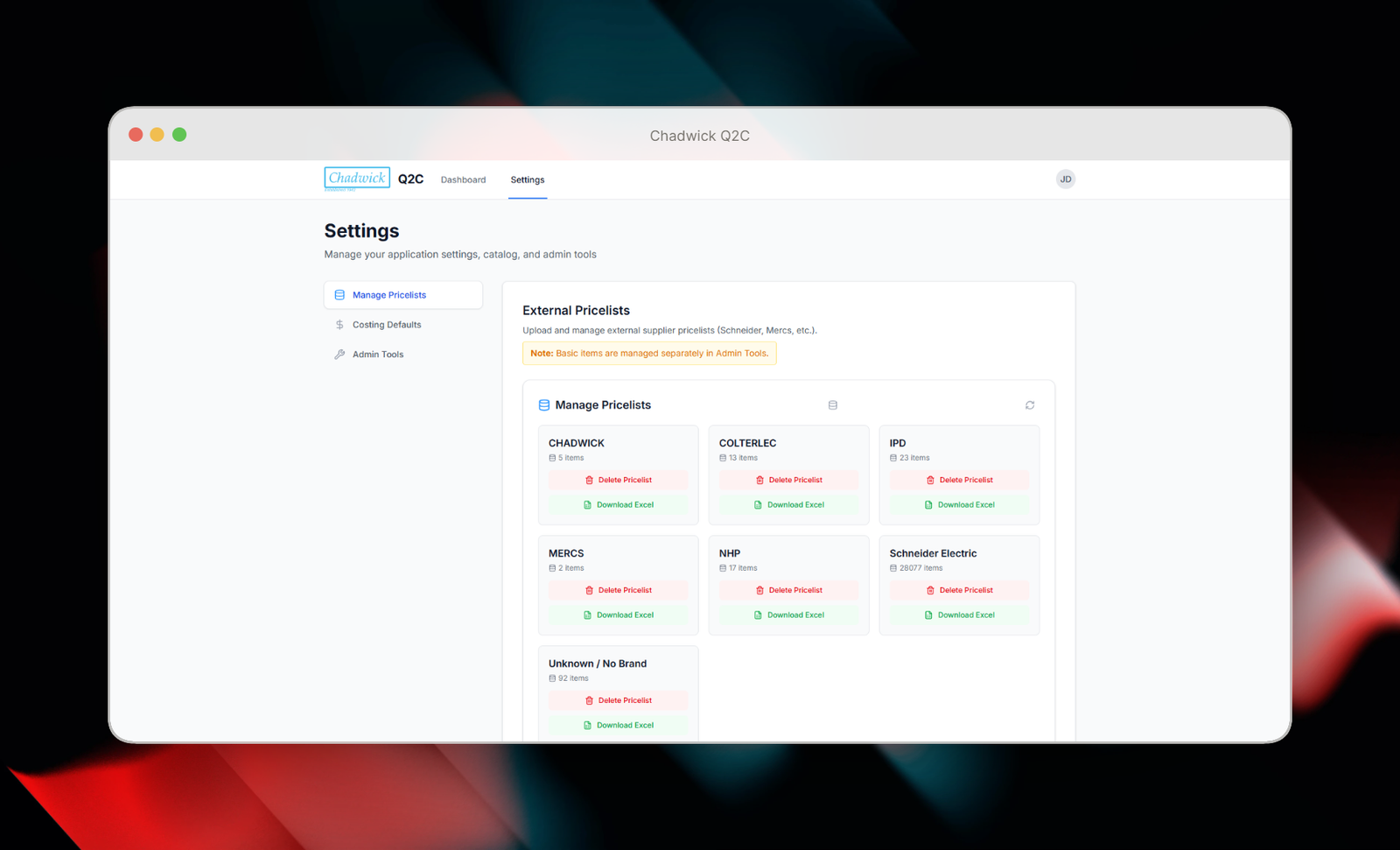
Chadwick Q2C System
Problem Statement
The existing quoting process relied heavily on manual inputs and fragmented logic, leading to pricing inconsistencies, higher risk of errors, and limited scalability.
As product configurations and pricing rules became more complex, the lack of a structured quote-to-cost workflow made it difficult to maintain consistency across quotes and ensure reliable internal costing.
My Responsibilities
- Analysed existing quoting and costing workflows to identify gaps and inconsistencies
- Structured business requirements into a clear quote-to-cost (Q2C) logic flow
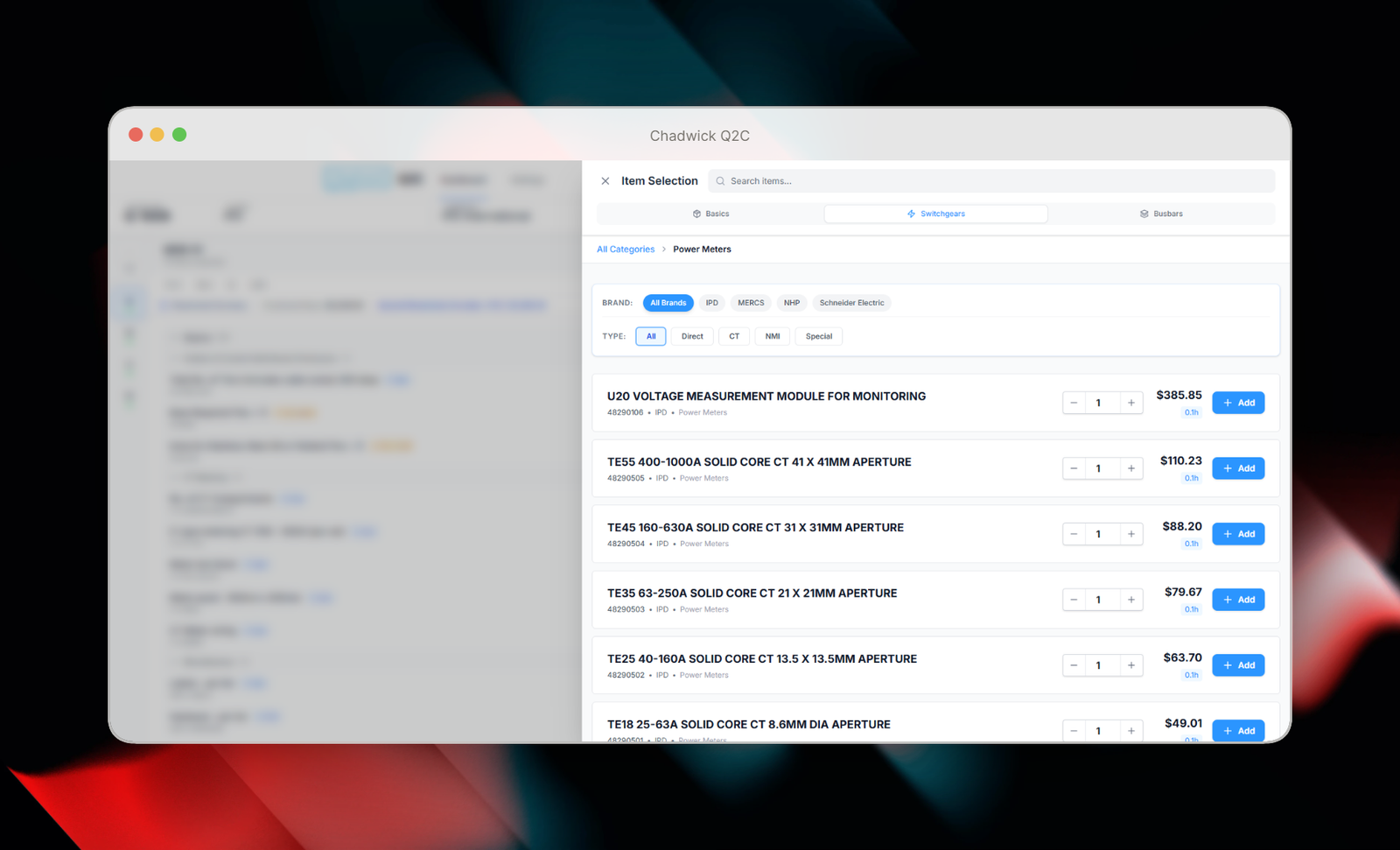
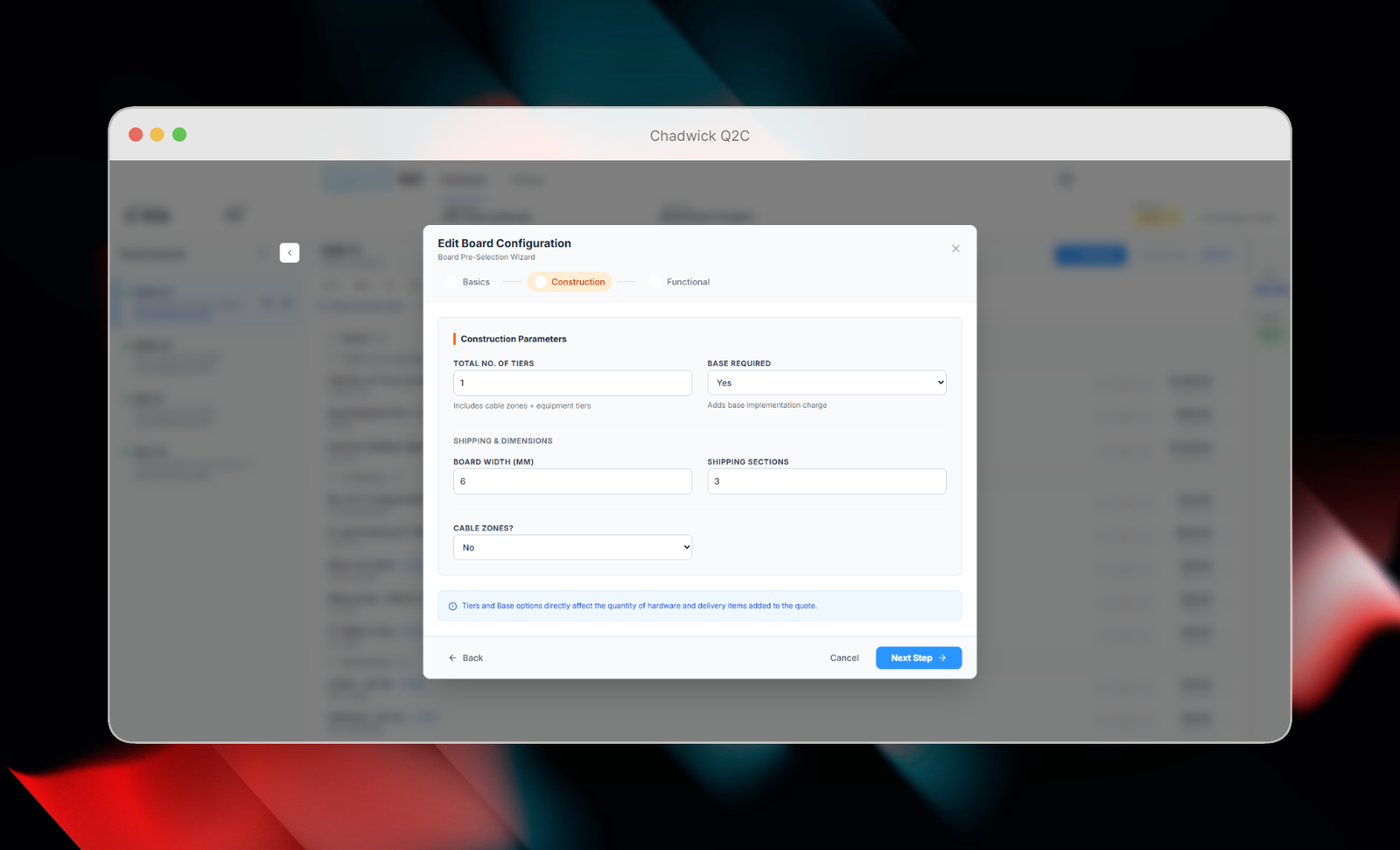
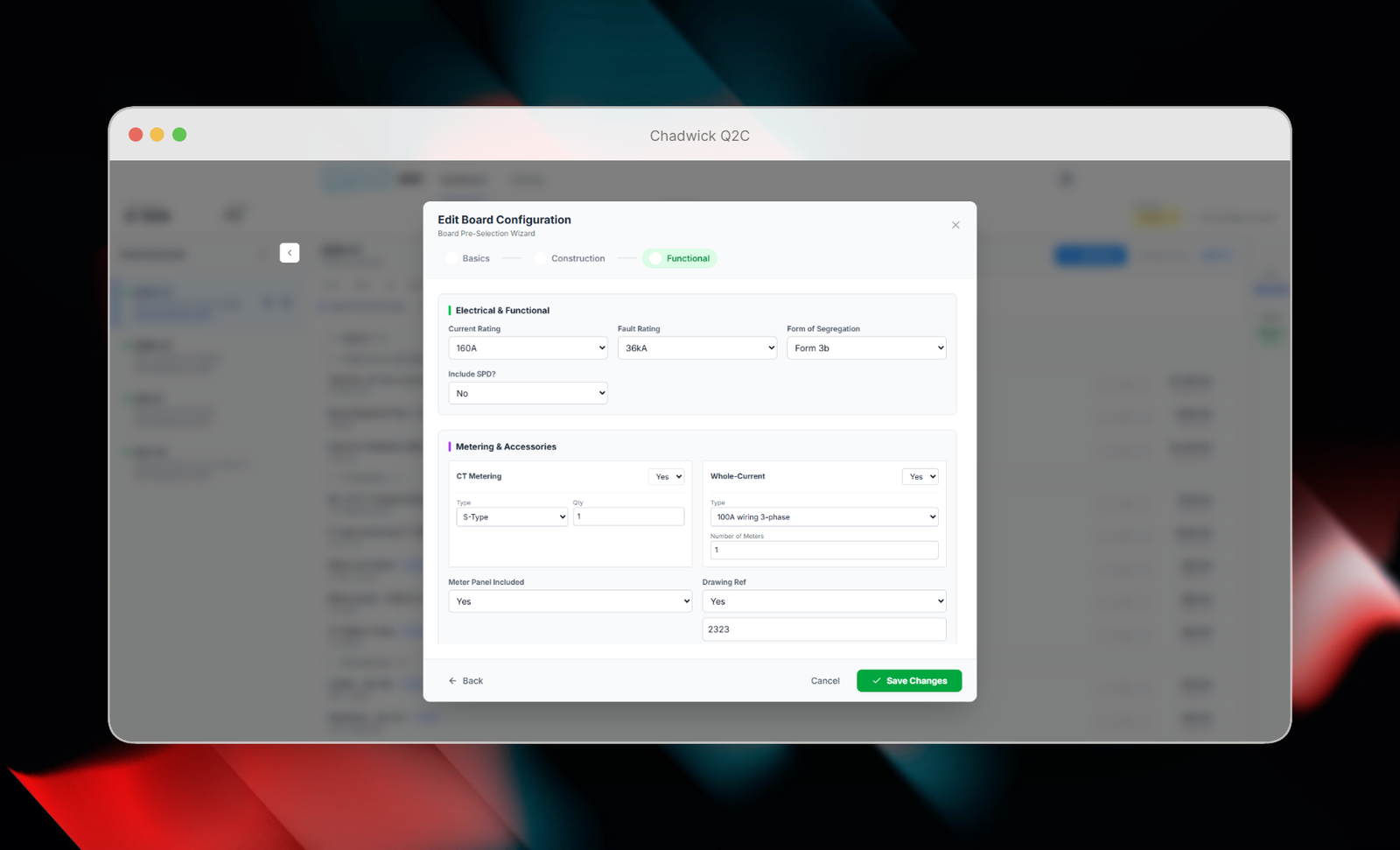
- Designed system rules for product selection, pricing inputs, and internal costing
- Collaborated with stakeholders to validate assumptions and refine workflows
- Supported implementation and testing of the system logic
My Approach
I approached the problem by first breaking down the end-to-end quoting workflow into clear stages, from product selection through to internal costing.
Key dependencies, decision points, and pricing rules were mapped to create a structured logic model that could support current requirements while remaining flexible for future expansion.
Stakeholder feedback was incorporated iteratively to ensure the system aligned with real-world usage and operational constraints.
Solution
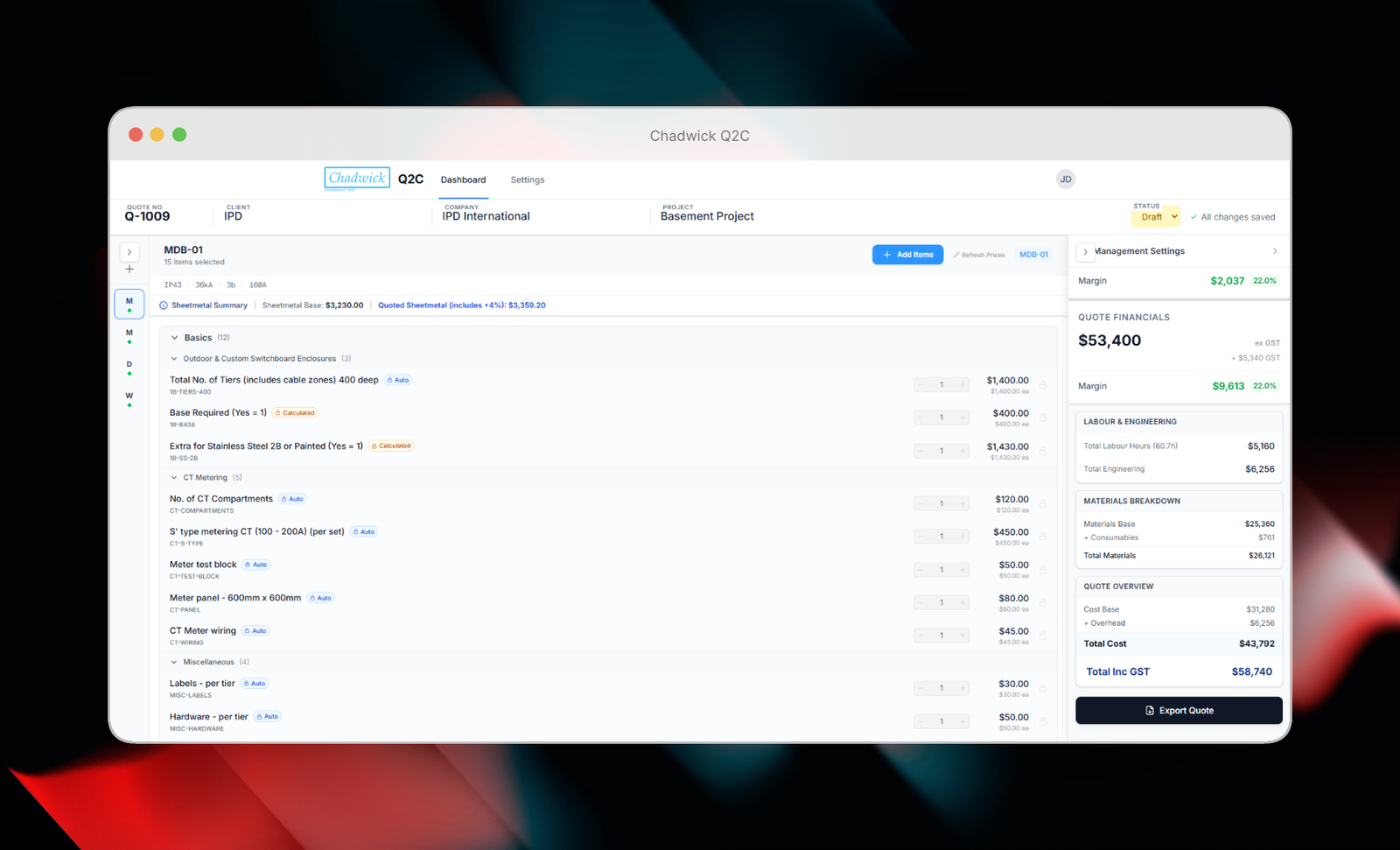
A structured quote-to-cost (Q2C) system was designed and implemented to standardise pricing logic and internal costing workflows.
The solution introduced clear rules for product configuration, pricing inputs, and cost calculations, reducing reliance on manual adjustments and improving consistency across quotes.
The system was designed to support future growth, allowing additional products, pricing rules, and automation layers to be introduced without reworking the core structure.
Tech Stack
Coolify
Docker
Excel
Next.js
Node.js
PostgreSQL
Prisma ORM
React
REST APIs
TypeScript
Lessons Learned
This project reinforced the importance of designing systems around real business workflows rather than isolated technical components.
Validating assumptions early with stakeholders helped prevent rework and ensured the system remained practical, scalable, and aligned with operational needs.